

For millions of adults living with type 2 diabetes, managing blood sugar has traditionally meant finger-prick tests a few times a day, a food diary, and a fair amount of guesswork in between. A major new clinical trial now suggests that a small wearable sensor can change that picture dramatically. Adults with type 2 diabetes who do not use insulin and who wore a continuous glucose monitor (CGM) spent approximately five more hours each day with their blood sugar in the healthy target range than those relying on standard care.
The study, described as the largest clinical trial of its kind and published in the New England Journal of Medicine, is significant because CGMs have historically been prescribed mainly to people with type 1 diabetes or to insulin users. This research, reported by the University of Colorado Anschutz Medical Campus, extends the evidence to the much larger group of people managing type 2 diabetes with lifestyle measures and oral medication alone.
What the trial actually found
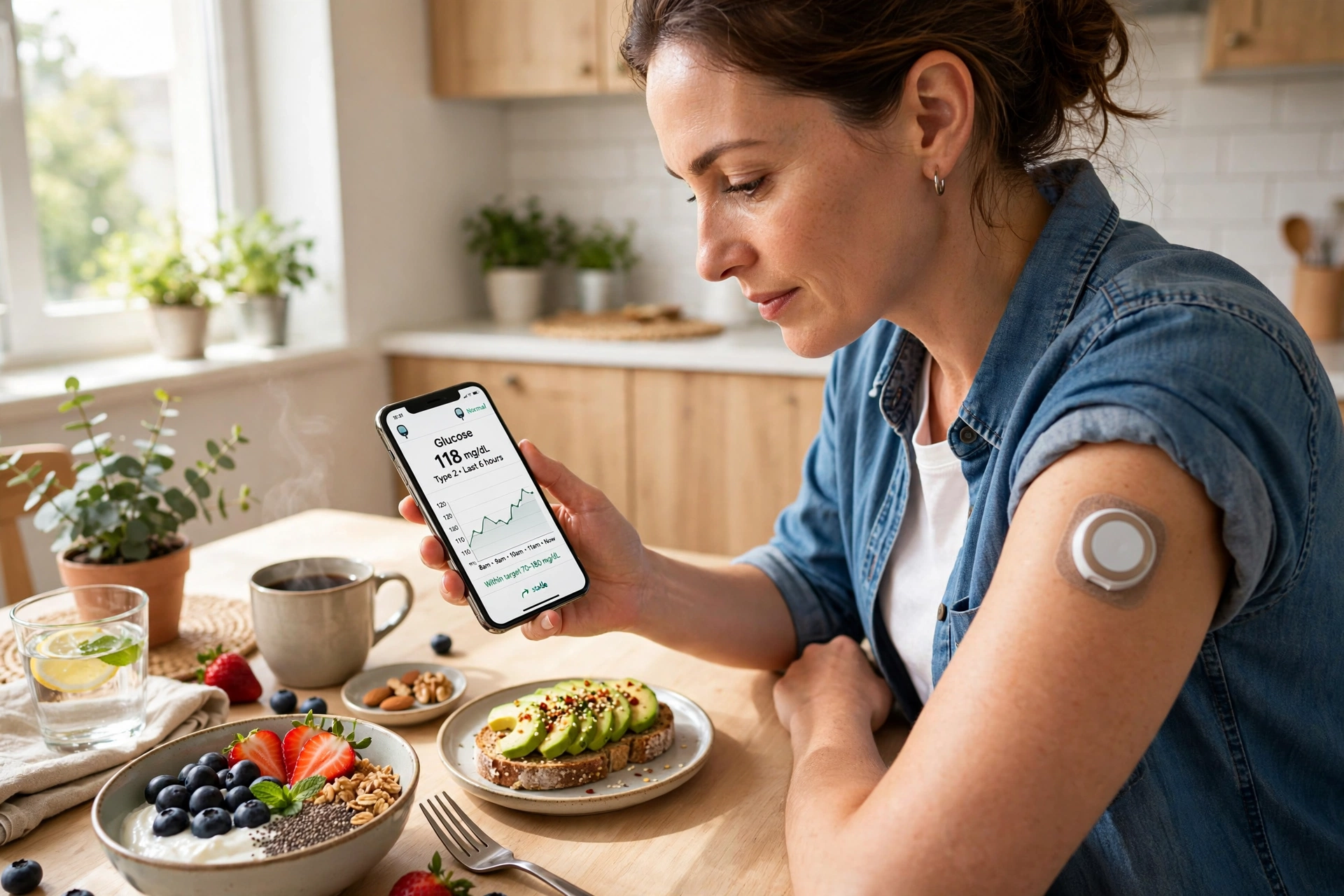
A continuous glucose monitor is a small sensor, usually worn on the back of the upper arm or the abdomen, that measures glucose in the fluid just under the skin every few minutes. Readings are sent to a phone or handheld reader, giving a near-constant stream of information instead of a handful of snapshots. Participants using the devices could see, in real time, how a meal, a walk, stress or a poor night of sleep moved their glucose up or down.
That feedback loop appears to be the key. Rather than simply collecting more data, patients could connect cause and effect within minutes: a refined-carbohydrate breakfast produced a sharp spike, while a short walk after lunch flattened the curve. Over the course of the trial, those small, repeated adjustments added up to roughly five extra hours a day spent in range — a difference clinicians consider clinically meaningful, because time in range is closely linked to the risk of long-term complications.
Why time in range matters
Doctors have long relied on HbA1c, a blood test that reflects average glucose over about three months. It is useful, but an average can hide dangerous highs and lows that cancel each other out. Time in range, by contrast, shows how stable glucose is hour by hour. More stable glucose means less strain on blood vessels, nerves, kidneys and eyes — the systems most often damaged by years of poorly controlled diabetes.
The American Diabetes Association already recognises CGM technology as an important tool in diabetes care, and evidence like this strengthens the case for wider access. It also fits a broader pattern in everyday health management: steady daily habits, from supporting gut health to understanding how coffee on an empty stomach affects you, tend to matter more than occasional dramatic interventions.
Who stands to benefit most?
The clearest beneficiaries are adults whose type 2 diabetes is not yet treated with insulin but whose glucose remains above target despite medication and lifestyle efforts. For them, a CGM can reveal problems that finger-prick testing misses, such as overnight highs or post-meal spikes at specific meals. It can also provide reassurance: many users report that seeing a stable line after a healthy meal reinforces the habits that produced it.
There may be benefits for motivation, too. Diabetes management can feel abstract, because high blood sugar often causes no immediate symptoms. A sensor makes the invisible visible, turning a three-monthly laboratory number into feedback a patient can act on the same day.
The practical limits
CGMs are not a magic fix. Sensors must be replaced every one to two weeks, they cost money, and coverage by health insurers for people not using insulin varies widely and remains one of the biggest barriers to wider use. The devices also generate a lot of data, which can overwhelm some users or cause anxiety if every small fluctuation is treated as a failure. Skin irritation at the sensor site and occasional inaccurate readings are further considerations, and a CGM works best when a clinician helps interpret the patterns it reveals.
Nor does technology replace the fundamentals. Medication taken as prescribed, a balanced diet, regular activity, sleep and routine check-ups remain the foundation of care. What the sensor adds is precision: it shows which of those fundamentals needs attention first.
What patients should ask their doctor
Anyone interested in trying a monitor should start with a conversation with their care team. Useful questions include whether a CGM is appropriate for their current treatment plan, whether their insurance covers it, how long a trial period should last, and how the data will be reviewed together. Many clinics can offer a short professional trial, in which a clinic-owned sensor is worn for a couple of weeks, before a patient commits to buying their own.
The bottom line
Five extra hours a day in the healthy range is not a marginal gain; compounded over months and years, it could translate into fewer complications and a better quality of life for a very large group of patients. This trial does not settle every question about cost and access, but it makes a strong case that continuous glucose monitoring should no longer be seen as a tool only for insulin users. For people with type 2 diabetes who feel they are managing their condition half-blind, that is genuinely welcome news.
