

Most gaming portals are collections of features. A game library here, a bonus system there, a support chat tucked into the corner. Each piece exists, but the pieces do not necessarily talk to each other. Players feel that disconnection — the sense that they are using a tool assembled from parts rather than something designed with a coherent vision behind it.
What Hitclub has built over time is different in character. The online gaming portal operates less like a feature list and more like an ecosystem — a set of interconnected elements where the game experience, the reward structure, the community layer, and the operational infrastructure reinforce each other rather than sitting in isolation. For modern users who have grown accustomed to digital products that feel integrated and intentional, that coherence is both noticeable and genuinely valuable.
This article examines how that ecosystem is constructed — layer by layer — and why the way those layers connect matters as much as any individual element within them.
The Game Layer — a Foundation Built for Variety
Formats That Serve Different Versions of the Same Player
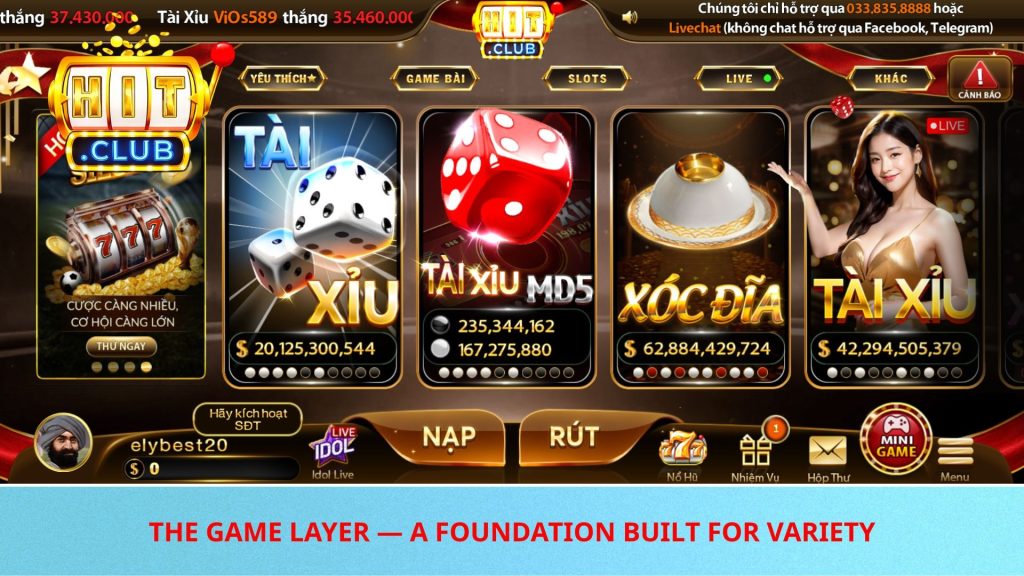
Modern players are not single-format users. The same person who spends a focused hour at a live dealer Baccarat table on a Friday evening might want nothing more than a few quick rounds of a crash game during a Tuesday lunch break. A gaming portal that only serves 1 of those sessions loses relevance for the other.
Hitclub’s game library was structured with this reality in mind. The current range includes:
- Card games — Traditional Vietnamese titles played against real human opponents in real time
- Slot games — A varied catalog across different volatility levels, themes, and bonus trigger mechanics
- Live dealer tables — Real-time Baccarat, Roulette, Blackjack, and Poker with professional dealers
- Arcade and crash games — Fish Shooting, Jackpot formats, and crash titles for faster-paced sessions
- Sports betting — Football, basketball, and international competition markets with live in-play options
Each category serves a different playing mode without requiring the user to leave the gaming portal or manage a separate account. That single-login access to multiple gaming formats is itself a structural feature of the ecosystem — it keeps users inside a coherent experience rather than fragmenting their attention across multiple destinations.
How Game Categories Connect to Each Other
In a well-designed ecosystem, moving between components feels natural rather than disjointed. Hitclub achieves this through a lobby structure that makes switching between game categories intuitive — a player finishing a slot session can move to a live dealer table or check current sports betting markets in seconds, without re-navigating the portal from scratch.
Seasonal events and promotional campaigns often span multiple game categories simultaneously, creating cross-format touchpoints that give users a reason to explore formats they might not normally prioritize. A football season promotion, for example, might run alongside a card game tournament — giving sports betting users and card game regulars a shared calendar moment that brings different segments of the community into the same conversation.
The Reward Layer — Incentives That Work Across the Ecosystem Bonuses Designed for the Full Player Journey
Beyond the Welcome Offer
In many gaming portals, the reward system front-loads its generosity — a substantial welcome bonus for new registrations, followed by declining incentives as the player moves further from their join date. The result is a structure that effectively treats new users better than loyal ones, which is a strange message to send to the people most likely to recommend the portal to others.
Hitclub’s reward architecture distributes incentives across the player lifecycle more evenly. New users receive a welcome bonus on their first deposit with clearly stated terms. From there, the loyalty system takes over — accumulating points with regular play that convert to progressively better perks as users move up the tier structure. Daily login rewards maintain low-level engagement on quieter days. Referral bonuses give existing users a stake in growing the community.
(Compiled from portal reward documentation at: https://hitclub.cab/ )
The seasonal layer adds variety without complicating the baseline. Promotions tied to major sporting events, local holidays, and new game launches give the reward calendar a rhythm that keeps the ecosystem feeling active year-round rather than static between promotional windows.
Transparency as a Structural Feature
A reward system that users cannot understand or trust is not an ecosystem asset — it is a friction point that generates frustration and support contacts. Hitclub’s bonus terms are written to be read rather than decoded. Wagering requirements appear at the point of claiming. Expiry windows are communicated upfront. The loyalty tier system shows users where they stand and what the next level requires.
This transparency creates a reward layer that users can actually engage with strategically rather than treating as an unpredictable variable. That engagement — users actively working toward a loyalty milestone or timing a deposit around a seasonal promotion — is what makes the reward layer a genuine part of the ecosystem rather than background noise.
The Community Layer — Where Individual Play Becomes Shared Experience Social Structures That Extend Engagement Beyond Sessions
Tournaments and Competitive Events
Individual gaming sessions are self-contained. Tournaments and competitive events are not — they create a shared timeline that keeps users engaged between sessions, gives them something to discuss in community spaces, and provides a structured reason to return at specific times.
Hitclub’s tournament calendar covers card game competitions, slot leaderboard events, and sports betting challenges across different time horizons. Short-window events create urgency. Longer-running competitions allow users to track their standing over days or weeks, maintaining a connection to the gaming portal that extends well beyond any single login.
The Messaging Communities That Grow Around Hitclub
Gaming communities do not exist only within a portal’s own interface. They form in messaging apps, on social media, and in dedicated gaming forums — spaces where players discuss strategies, share experiences, and evaluate portals openly. Hitclub has an active presence in these external community spaces, with users sharing session highlights, comparing loyalty tier progress, and discussing new game additions.
This external community layer functions as an organic extension of the gaming portal ecosystem — keeping Hitclub relevant in players’ minds during the hours they are not actively playing and serving as the primary source of genuine, unfiltered information for new players researching their options.
The Operational Layer — Infrastructure That Makes Everything Else Work
The Foundation Beneath the Experience Financial Infrastructure That Users Can Rely On
An ecosystem is only as strong as its operational foundation. For an online gaming portal, that foundation is financial — deposits, withdrawals, and the reliability with which both are processed. Hitclub’s financial infrastructure supports a range of Vietnamese bank transfer options and major e-wallets, with deposit processing that is effectively immediate and withdrawal turnaround times that users consistently describe as dependable.
The absence of financial friction is what allows everything above the operational layer to function as intended. A user who trusts that their funds are accessible engages more freely with game categories, participates more actively in promotional events, and is more likely to recommend the portal to others. Financial reliability is not exciting, but it is the substrate on which the entire ecosystem rests.
Mobile Performance as an Ecosystem Enabler
A gaming ecosystem that only functions well at a desk is, by definition, a partial ecosystem for modern users. Hitclub has invested in mobile performance as a structural requirement rather than an optional enhancement — and the results are visible in how the portal behaves across different device types and connection qualities.
Games load at speeds that support genuine engagement on standard mobile networks. Navigation is thumb-friendly and consistent across screen sizes. Switching between game categories, checking betting markets, or reviewing loyalty point totals is equally fluid on a phone as it is on a desktop. For users who live predominantly on mobile, this performance transforms the gaming portal from something they visit occasionally into something woven into their regular digital routine.
Support That Holds the Ecosystem Together
Every ecosystem needs a mechanism for handling the moments when components fail. In a gaming portal, that mechanism is customer support. Hitclub runs 24/7 live chat with response times that consistently meet or exceed user expectations. Issues are resolved at first contact across the most common categories — account access, transaction status, game connectivity, and reward term clarification.
Support is accessible through messaging channels users already use daily, which removes the friction of navigating to a separate help system mid-session. That accessibility keeps the support layer integrated with the overall ecosystem rather than existing as a separate, difficult-to-reach service.
Conclusion
What Hitclub has built is not simply a gaming portal with a long feature list. It is a coherent entertainment ecosystem where game variety, reward structures, community engagement, and operational infrastructure connect in ways that make the overall experience more valuable than any individual component would suggest.
For modern users who approach digital entertainment with high expectations for integration, responsiveness, and genuine value across the full arc of their engagement, that ecosystem quality is precisely what turns a trial into a habit — and a habit into a long-term relationship with a gaming portal worth staying loyal to.
