

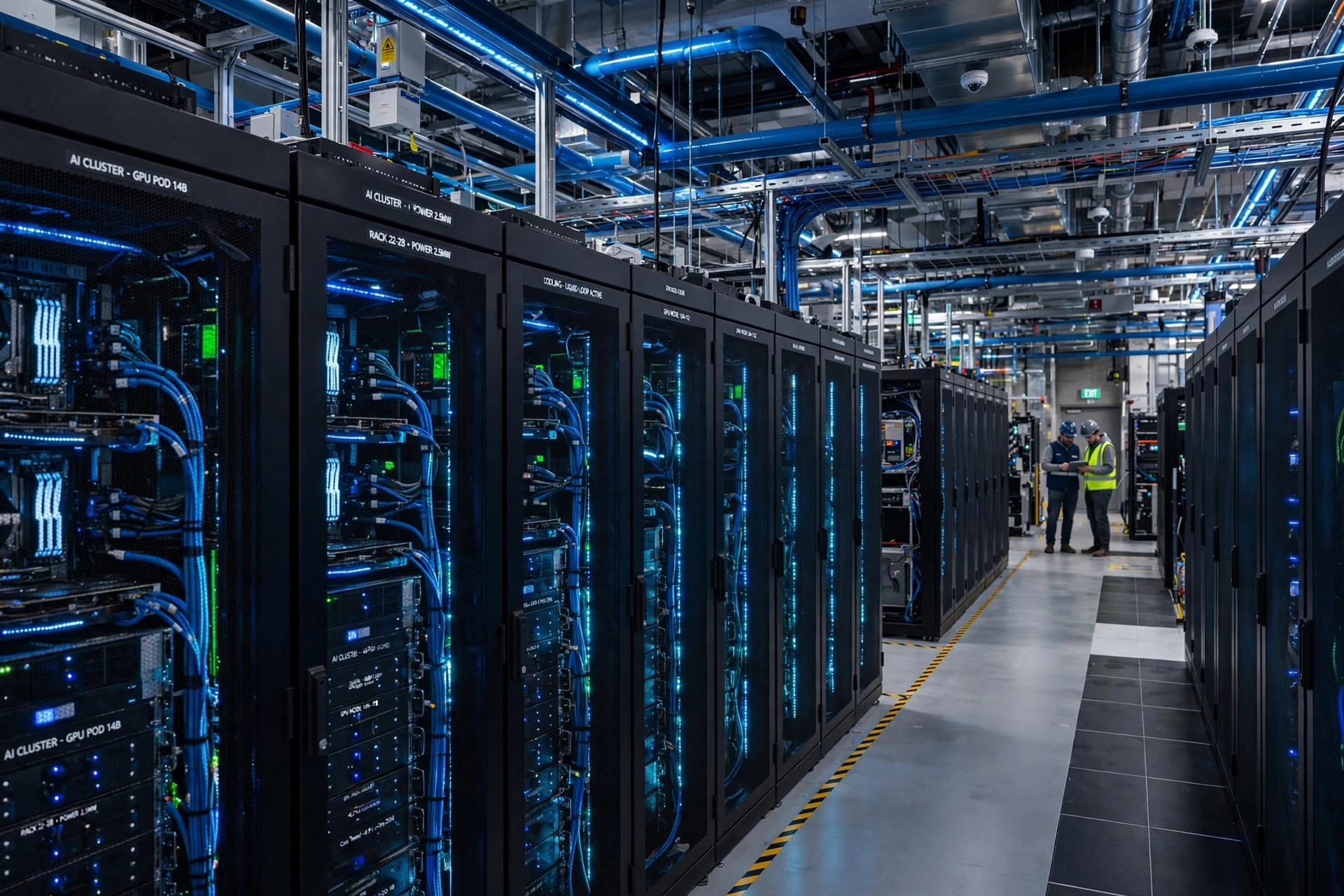
The artificial intelligence boom has produced some of the largest construction and equipment budgets in technology history. Cloud providers and AI companies are racing to build data centres filled with advanced chips, networking gear and power infrastructure. Yet a growing number of analysts are asking an uncomfortable question: the spending forecasts are rising faster than the revenue that is supposed to justify them. As one recent industry analysis put it, the AI math is not quite mathing.
Reporting by The Register highlights forecasts in which infrastructure spending is set to outstrip expected AI revenue, leaving providers betting heavily that demand, prices and efficiency will catch up before the bills come due.
Why the bill is so enormous
A modern AI data centre is far more than a warehouse of computers. The graphics processors used to train and run large models are expensive, power-hungry and replaced on short cycles as faster generations arrive. Around them sits an equally costly supporting cast: high-speed networking, liquid cooling, backup power, land, grid connections and the buildings themselves. When several companies build at once, they also bid against each other for the same chips, engineers and electricity, pushing prices higher still.
Energy is the second major pressure. According to the International Energy Agency, data centres already account for a meaningful share of electricity demand in many regions, and AI workloads are the fastest-growing part of that demand. Securing power has become a strategic problem in its own right, with operators signing long-term supply deals and even backing new generation projects.
The revenue lag
None of this would be a problem if revenue were keeping pace. AI subscriptions, cloud rentals and enterprise contracts are growing quickly, but from a much smaller base than the investment figures. Training a frontier model costs a fortune up front, while the income from selling access to it arrives gradually — and competition is already pushing prices for AI services down, which is good for customers but squeezes the margins providers need to repay their construction loans.
There is also a timing mismatch. A data centre ordered today may take years to build and fill, yet the chips inside it can look dated within a few product cycles. Investors applying classic value investing discipline would ask what the assets earn over their whole life, not just in their first busy year — and that is precisely the question the industry is struggling to answer with confidence.
What could close the gap
Bulls argue the pessimism is premature. Every general-purpose technology, from railways to broadband, involved overbuilding ahead of demand, and the capacity eventually found its uses. AI adoption inside companies is still early; as tools move from experiments into everyday workflows in medicine, law, logistics and software, usage — and willingness to pay — could climb steeply. Efficiency gains help too: each new chip generation delivers more computing per watt, and better software can extract more work from the same hardware.
There are operational lessons from other industries as well. Just as manufacturers obsess over consistency and cost control across production, data centre operators are standardising designs, pre-ordering equipment and building in phases so that capacity can pause if demand disappoints.
The risks if it does not
If revenue falls short for long, the consequences would ripple outward. Smaller AI firms that rent capacity could face higher prices or consolidation. Regions that approved power-hungry facilities expecting permanent jobs and tax income might be left with underused sites. And a sharp correction in AI infrastructure stocks would affect pension funds and ordinary savers, not just technology executives. The environmental stakes are real as well: capacity built but not efficiently used still consumes land, water and electricity.
What to watch next
Over the coming quarters, the signals to watch are utilisation rates in new facilities, the price trends for renting AI computing, renewal rates for enterprise AI contracts, and whether power costs ease as new generation comes online. Providers that disclose clear returns on their AI capital spending will likely be rewarded; vague promises may meet a cooler reception than they did a year ago.
The bottom line
The AI build-out is not necessarily a bubble, but it is unquestionably a bet — one of the largest in business history — that future revenue will grow into today’s spending. The technology itself continues to advance at remarkable speed. Whether the finances advance with it will decide if this era is remembered as visionary investment or as an expensive lesson in building first and asking questions later.
